📅 Last updated on February 2026 — Written by Shahin, Founder of StarmarkAI
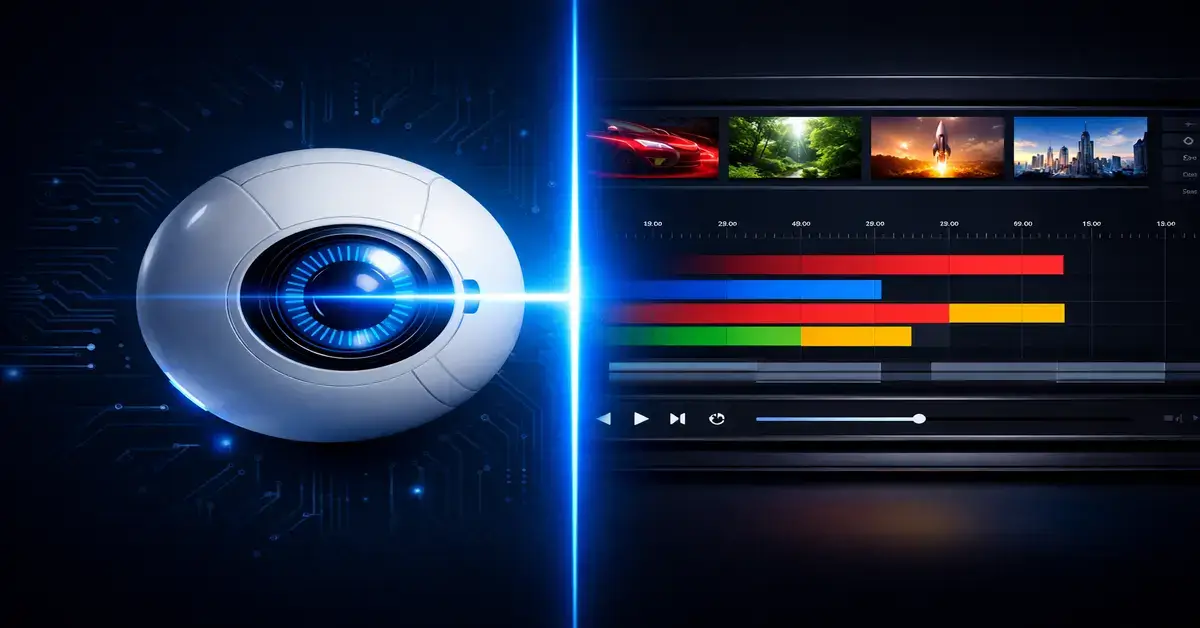
OpenAI Orb and Google Veo are two of the biggest AI trends right now. OpenAI Orb and Google Veo—and if you are a blogger or content creator, both of these developments affect your workflow more than you might think. OpenAI Orb is reshaping how the internet verifies human identity in an AI-saturated world. Google Veo is transforming how video content is created from a simple text prompt. Together, they signal a major shift in how content is produced, distributed, and trusted online.
Here is what both trends actually mean for your blog and your AI-powered business strategy.
⚡ Quick Summary
OpenAI Orb is a biometric iris-scanning device that verifies you are a real human in an AI-driven internet—creating a “proof of humanity” digital ID. Google Veo is an AI video generation model that creates cinematic-quality videos with synchronized audio from a simple text prompt. For bloggers, Orb signals why authentic human content matters more than ever, while Veo opens a new content format—AI-generated video—that was previously inaccessible without a full production team.
📑 Quick Navigation
What Are OpenAI Orb and Google Veo?
Before diving into the impact, here is a quick grounding in what these two technologies actually are—because they are often misunderstood in the headlines.
OpenAI Orb is not an OpenAI product in the traditional sense. It is a biometric device from World (formerly Worldcoin), co-founded by Sam Altman—the same Sam Altman who runs OpenAI. The Orb is a spherical white device that scans your iris to confirm you are a real, unique human being. It then issues a “World ID” — a digital proof of humanity that can be used across apps and platforms to distinguish real users from AI bots. As of 2025, the Orb has launched in the US across six cities and has verified over 12 million people globally.
Google Veo is Google DeepMind’s AI video generation model. Currently on version 3.1, Veo creates high-definition video—up to 1080p—from a simple text prompt, complete with synchronized audio including dialogue, sound effects, and ambient noise. It is available through the Gemini app, Google Flow (Google’s AI filmmaking tool), and Vertex AI for developers.
Quick Comparison: OpenAI Orb vs Google Veo
| Feature | OpenAI Orb (World ID) | Google Veo 3.1 |
|---|---|---|
| What It Does | Verifies human identity via iris scan | Generates AI video from text prompts |
| Made By | Tools for Humanity (Sam Altman) | Google DeepMind |
| Launch | US launch April 2025 | Veo 3 May 2025, Veo 3.1 October 2025 |
| Access | Physical Orb device in 6 US cities | Gemini app, Google Flow, Vertex AI |
| Cost | Free to verify—earns WLD crypto | Gemini subscription required |
| For Bloggers | Human content trust signal | AI video content creation |
| Privacy Concern | High—biometric iris data | Medium—AI-generated content watermarks |
| Global Impact | 12M+ verified users worldwide | 275M+ videos generated in Flow |
OpenAI Orb—What It Actually Means for Bloggers
The OpenAI Orb exists because of a problem that every blogger should understand deeply: the internet is becoming flooded with AI-generated content, and it is increasingly impossible to tell what was created by a real human versus an AI bot. Sam Altman and the World team built the Orb specifically to create a reliable “proof of humanity” layer for the internet.
For bloggers, this has three direct implications.
Human Content Is Becoming More Valuable
As AI-generated content floods search results, social media, and email inboxes, real human perspective is becoming a scarce and valuable signal. Google’s E-E-A-T framework already rewards first-hand experience and expertise. The Orb trend accelerates this shift—platforms and search engines will increasingly prioritize content they can verify comes from a real person with real experience. Bloggers who build a strong personal brand and genuine expertise are in a stronger position than those producing generic AI content at volume.
AI Detection Is a Growing Concern
The same problem the Orb is trying to solve—distinguishing humans from AI—is the problem Google faces when ranking content. Bloggers who publish heavily AI-generated content without human editing, personal voice, or original insight are increasingly at risk as AI detection improves. The Orb trend is a signal that the industry is taking AI content saturation seriously at an infrastructure level.
Digital Identity for Content Creators
World ID—the digital credential issued after Orb verification—is already being integrated into platforms including Match Group and Visa. As more platforms adopt proof-of-humanity verification, bloggers and content creators may find that verified human identity becomes a trust signal for their audiences. Think of it as a future version of the author verification badge—but built into digital infrastructure rather than a platform-specific label.
Google Veo—What It Actually Means for Content Creators
Google Veo 3.1 is the most capable AI video generation tool currently available to the public. It creates 1080p video from a text prompt, with synchronized audio—dialogue, sound effects, ambient noise—generated alongside the visuals in a single pass. This is a significant capability jump from earlier AI video tools that produced silent or poorly synced video.
For bloggers and content creators, Veo opens several practical opportunities.
Video Content Without a Camera or Crew
Creating video content previously required a camera, lighting, editing software, and significant time. Veo allows a blogger to describe a scene in text and receive a cinematic-quality video clip in minutes. For bloggers who want to add video to their content strategy—YouTube, Instagram Reels, TikTok—without the traditional production overhead, Veo removes the biggest barrier to entry.
Social Media Content at Scale
Short-form video content drives significant traffic to blog posts when shared on social media. Veo 3.1 can generate 4-8 second clips in landscape or portrait format—precisely the format needed for YouTube Shorts, Instagram Reels, and TikTok. Bloggers can now create multiple video variations from a single article to drive social traffic without filming anything.
Product Demo and Tutorial Videos
For bloggers in the AI tools, SEO, or digital business space—like StarmarkAI—video demonstrations of tools and strategies add significant value to written reviews. Veo can generate illustrative video content that supports written articles without requiring screen recording or on-camera presence. This is particularly valuable for bloggers who are not comfortable on camera.
Watermarking and Transparency
All videos generated with Veo are marked with SynthID—Google DeepMind’s AI content watermarking technology. This ensures transparency about AI-generated video and reduces the risk of misleading audiences. For bloggers who use Veo, disclosing AI-generated video content is both an ethical practice and an emerging platform requirement.
Pros and Cons
✅ Pros for Bloggers
- Veo makes video content creation accessible without cameras or editing skills
- Orb trend reinforces why authentic human content matters—advantage for real bloggers
- Veo generates social media video at scale from existing written content
- World ID could become a future trust signal for content creators
- Veo 3.1 synchronized audio makes video feel professional and complete
- Both trends signal the growing value of original, human-led content strategy
❌ Cons and Risks
- Orb raises serious privacy concerns—iris biometric data is sensitive
- Veo video quality still requires clear, detailed prompts to produce usable output
- Orb banned in Kenya, Hong Kong, and Spain—regulatory acceptance uncertain
- Veo clips are limited to 8 seconds per generation—longer content needs multiple clips
- AI-generated video must be disclosed—misleading use damages blogger trust
- Both technologies increase competition—more creators can produce polished content
Global Impact on AI-Powered Business
The broader significance of both technologies goes beyond individual bloggers. Together, OpenAI Orb and Google Veo represent two sides of the same AI transformation: one solving the problem of who created content, the other solving the problem of how content is created.
For AI-powered businesses and solopreneurs, this creates a clear strategic direction. The future of content credibility is human verification—whether through platform badges, author credentials, or eventually digital identity tools like World ID. The future of content production is AI-assisted creation—with tools like Veo making video as accessible as text. The bloggers who will thrive in this environment are those who combine genuine human expertise and experience with AI tools that amplify their output.
What Bloggers Should Do Right Now
Both trends are early but moving fast. Here is what I recommend for bloggers and AI-powered business owners who want to stay ahead.
In Response to OpenAI Orb and Human Verification
Strengthen your personal brand and author credentials on every article you publish. Add your name, photo, professional background, and first-hand experience to every post. Use your About page to establish genuine expertise. Write from real experience—your 60-day Writesonic test, your real NeuronWriter ranking results, your actual tool costs. This is the human signal that will matter more as AI-generated content increases. Google’s E-E-A-T framework is already rewarding this approach.
In Response to Google Veo
Start experimenting with AI video tools—Veo through the Gemini app is the most accessible starting point. Even 4-8 second video clips promoting your blog posts on Instagram Reels or YouTube Shorts can drive meaningful traffic back to your written content. Use video as a traffic source that supports your blog—not as a replacement for it. Always disclose AI-generated video content clearly.
Personal Verdict
Both OpenAI Orb and Google Veo are significant AI trends that bloggers should understand—not because you need to use either immediately, but because they reveal the direction the content landscape is moving.
Orb tells me that human authenticity is the most valuable thing a blogger can offer as AI content volume increases. Every real experience, every honest review, every personal result I share at StarmarkAI is more valuable—not less—in a world where AI can generate unlimited generic content. That is reassuring, and it reinforces exactly the approach we take here.
Veo tells me that video is becoming as accessible as text for solo content creators. I plan to experiment with Veo for short-form social media content in the coming months—not to replace written articles, but to promote them through a new format.
Frequently Asked Questions
What is OpenAI Orb?
OpenAI Orb—more accurately called the World Orb—is a biometric iris-scanning device co-founded by Sam Altman through his company Tools for Humanity. It scans your iris to verify you are a unique, real human, then issues a World ID digital credential as proof of humanity. It is designed to address the growing problem of distinguishing real humans from AI bots online.
What is Google Veo and how does it work?
Google Veo is an AI video generation model developed by Google DeepMind. You enter a text prompt describing a scene—including camera angles, lighting, mood, and audio—and Veo generates a high-definition video clip with synchronized sound. The latest version, Veo 3.1, supports 1080p video with native audio generation, including dialogue and ambient sound effects.
How does OpenAI Orb affect bloggers?
OpenAI Orb signals that authentic human identity and verified human content will become more valuable online as AI-generated content increases. For bloggers, this means investing in a strong personal brand, genuine first-hand experience in your content, clear author credentials, and original insights that AI cannot replicate—exactly the factors that Google’s E-E-A-T framework already rewards.
Can bloggers use Google Veo for content creation?
Yes. Google Veo is accessible through the Gemini app and Google Flow for content creators. Bloggers can use it to generate short video clips—4 to 8 seconds—for social media promotion of their articles on platforms like YouTube Shorts, Instagram Reels, and TikTok. All AI-generated video from Veo is watermarked with SynthID and should be disclosed as AI-generated content.
Is OpenAI Orb safe to use?
World claims that iris data is processed on the Orb and then deleted—the device does not store biometric information. The encrypted iris code is stored on the user’s own device, not on World’s servers. However, the technology has faced bans in several countries, including Kenya, Hong Kong, and Spain, over privacy concerns. Whether to use Orb is a personal decision that involves weighing the utility of a World ID against the privacy implications of iris scanning.
Will Google Veo replace human video creators?
No—not for authentic content that requires genuine human expertise, on-camera presence, or personal experience. Veo is a tool for generating illustrative and promotional video content, not a replacement for a blogger’s authentic voice and expertise. For short-form social media clips, product illustrations, and concept visualizations, Veo removes production barriers. For trust-building, first-hand video content, and a real human presence remain irreplaceable.
Final Thoughts
The OpenAI Orb and Google Veo trends point to the same conclusion from different directions: the content landscape is changing faster than most bloggers realize, and the creators who adapt thoughtfully will have a significant advantage over those who either resist AI entirely or rely on it without adding genuine human value.
Orb reminds us that being human is a competitive advantage online. Veo reminds us that the tools to produce professional-quality content are becoming accessible to everyone. The bloggers who win in this environment are the ones who know which is which—and use AI to amplify their human expertise rather than replace it.
That is the approach at StarmarkAI. And based on where these trends are heading, it is the right one.
— Shahin, AI Automation Engineer, StarmarkAI.com